Paint sheen, and why a wet sample lies
Sheen changes more between the wet edge and the cured film than most colours do, which is why a wet sample tells almost nothing.
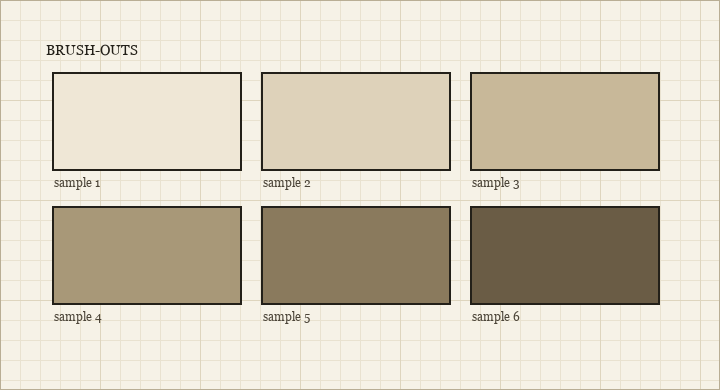
Paint sold as matt, eggshell, satin and gloss sits on a continuous scale rather than in four boxes, and different makers place their boundaries in different places. The only reliable comparison is a set of brush-outs made at the same time, on the same substrate, under the light of the room they are intended for.
Use offcuts of the same board or lining paper rather than the little card supplied with a sample pot. Card is sized differently from a wall and flattens the sheen. Prime the offcuts first so that all six absorb at the same rate; an unprimed piece of plasterboard will make a mid sheen look flat and a flat look chalky.
Two coats, with the recommended interval between them, are the minimum. A single coat of a mid sheen frequently looks matt because the first coat is still partly soaked in, and the difference only appears when the second coat sits on top of a sealed film.
Label the back, not the front. Writing beside a brush-out in marker adds a shiny line next to the sample and changes what the eye reads. A number pencilled on the reverse and a list kept on paper avoids that entirely.
Cure time matters more than drying time. Most emulsions are touch dry within the hour and continue to harden and settle for days. A sample assessed at bedtime on the day it was painted will read wetter, deeper and glossier than the same sample a week later.
Look at the samples twice: flat on, which shows colour, and at a grazing angle, which shows sheen. A wall is seen both ways in ordinary use, and a finish chosen only from the flat-on view will surprise whoever has to look along it from a doorway.
The practical reason for caring is maintenance rather than appearance. Higher sheen is easier to wipe and harder to touch in; flatter finishes touch in almost invisibly but mark where hands and furniture meet them. A hallway and a ceiling have opposite requirements and there is no reason for them to share a tin.