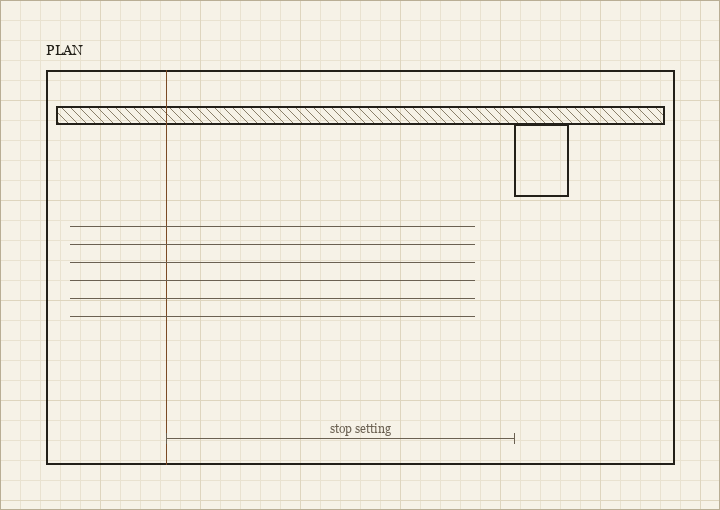
Fitting a door stop and closing the gap
A rattling door is a stop in the wrong place, and moving it takes less time than living with it.
The stop is the thin bead on the frame that the door closes against. Fitted a fraction too far back, the door has to travel past its latch position to touch it, so it rattles. Fitted a fraction too far forward, the door hits the stop before the latch engages and has to be slammed.
The right position is found with the door latched, not with the door held by hand. Close it properly, let the latch hold it, and then bring the stop up until it just touches along its length. A business card's thickness of clearance at the top is a useful margin for seasonal movement.
Old stops are frequently painted into place over many coats, and prising them off tears the frame. Running a blade along both edges to cut the paint film first means the bead comes away cleanly and can be refitted rather than replaced.
Refit with pins rather than screws, and punch the heads below the surface so they can be filled. Screws in a thin bead split it, and a split stop has to be replaced with new timber that will never quite match the profile of the original.
Check the stop against the whole height of the door. Frames are rarely straight, and a stop set perfectly at the latch can stand a couple of millimetres away from the door at the head. Packing behind the bead at the high points is easier than trying to bend it into compliance.
While the stop is off, it is worth looking at the latch keep in the frame. A keep set slightly too far out produces the same rattle from a different cause, and moving it a millimetre often makes adjusting the stop unnecessary.
On a door between a heated and unheated space, the stop is also where a compression seal goes. Fitting the seal first and then setting the stop to suit its compressed thickness avoids the common result of a seal so proud the door will not latch.