Exterior timber before a wet winter
Exterior timber fails at end grain and joints, almost never in the middle of a board.
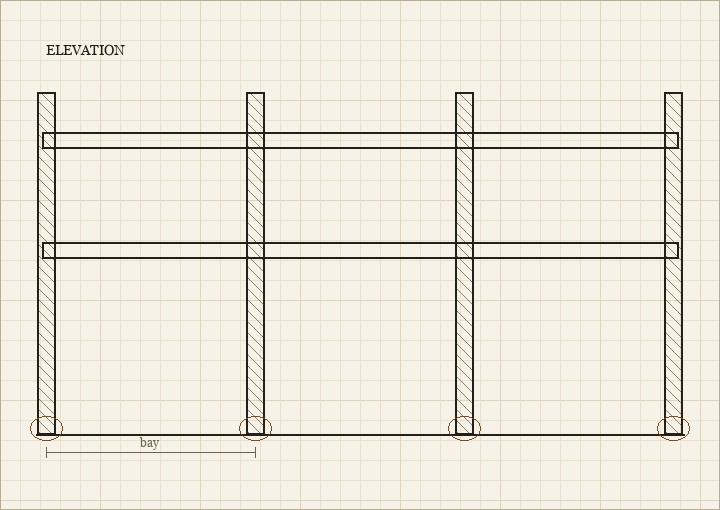
Water enters where fibres are cut and where two pieces meet. A porch post that looks sound along its length will often be soft in the last few centimetres at the bottom, because that is where the end grain stands in whatever collects on the surface below it.
Treat those points before anything else. End grain takes several times the coating a face does and should be given repeated applications until it stops absorbing, which on a dry post can be three or four coats in quick succession.
Open joints want to be sealed while they are dry, which in practice means working in a settled dry spell rather than when the mood strikes. Sealant applied over damp timber traps the moisture behind it and accelerates exactly the decay it was meant to prevent.
Give water somewhere to leave. A post standing directly on a flat surface stays wet; the same post on a small standoff, or on a surface cut with a fall, dries between showers. Where a standoff cannot be added, keeping the base clear of leaf litter and soil achieves a good part of the same thing.
Check the fixings at the same time. Corroding fasteners stain the timber around them and lose section where they are wettest, which is inside the joint where nothing can be seen. Replacing a few fixings is a small job compared with replacing a rail that has dropped.
Coat in the right season. Film-forming finishes need dry timber and reasonable temperatures to form properly, and a coat applied late in a cold damp autumn may never cure. Late summer and early autumn are the useful window in most of the year.
Then look again in spring. Exterior work is maintained rather than finished, and a twenty-minute walk round with a bradawl, testing the bottom of every upright, is what keeps the twenty-minute job from becoming a rebuild.