Draught proofing a sash window
A sash window leaks in four different places and three of them are usually ignored.
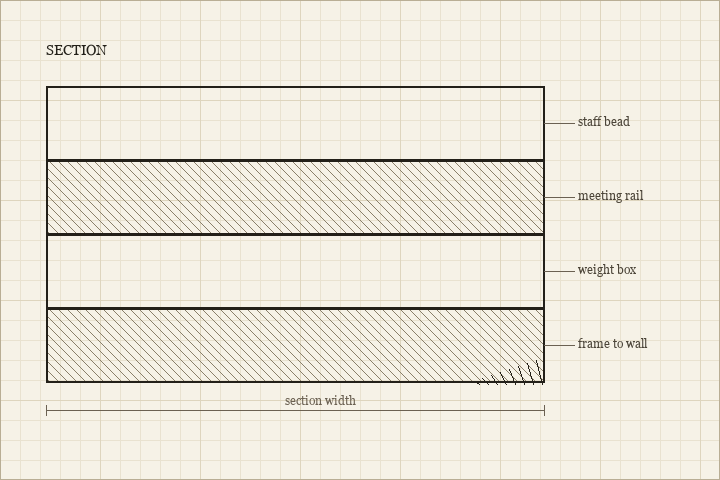
The obvious path is the meeting rail in the middle, where the two sashes pass one another. It is the one people feel with a hand and the one draught strip is usually aimed at. It is rarely the largest.
The staff bead gap runs the full height of the window on both sides and is often several millimetres wide, because a sash has to slide. Brush seals set into the beads close that gap while still letting the sash run, which is the whole reason brush is used rather than foam or rubber.
The third path is the box itself. On traditional windows the weights hang in a hollow box that connects to the outside air, and the pocket cover is rarely airtight. Sealing around the pocket, without sealing the pocket shut, closes a path that is invisible from inside the room.
Fourth is the frame-to-wall junction. Movement over decades opens a gap behind the architrave that no amount of work on the sashes will touch. Easing the architrave off, filling behind it and refitting is more disruptive than the rest of the job and frequently makes the biggest single difference.
Work in that order and test as you go, ideally on a windy day with the rest of the house closed. Sealing everything at once makes it impossible to know what helped, and there is a real risk of over-sealing a sash so it binds.
Keep some ventilation deliberately. A room that was ventilated by accident through its windows still needs air once those leaks are closed, and the humidity that used to escape through them has to go somewhere. Trickle ventilation or simply opening the window regularly is part of the job, not a failure of it.
Cords and pulleys deserve a look while the sashes are out. A window that has been painted shut and freed again will run properly for years if the cords are sound, and a broken cord discovered afterwards means taking the whole thing apart a second time.