Silicone joints that do not peel
Most failed sealant joints failed on the day they were applied, not months later.
A sealant joint moves. Bath, tray and worktop all shift slightly with load and temperature, and the joint's only job is to accommodate that movement while staying attached at both sides. The shape of the bead decides whether it can.
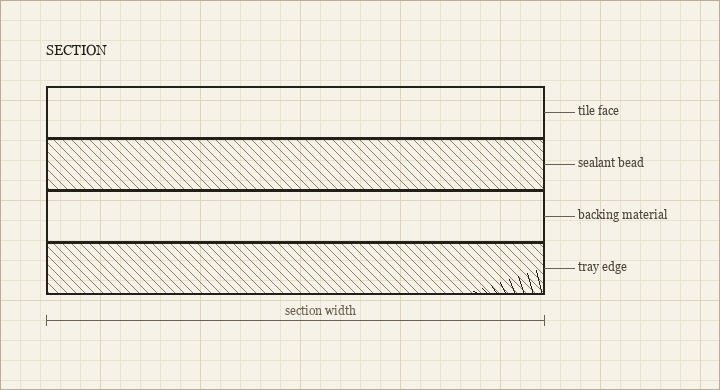
A bead that sticks to both faces and to the back of the gap is bonded on three sides. When the joint opens it cannot stretch, because the back is held, so it tears - usually along one edge, in a line that then collects water. Keeping the back free, with backing material in a deep gap, lets the bead stretch across.
Surfaces have to be dry and free of old sealant, and that means genuinely free. A thin residue of old silicone is enough to prevent the new bead bonding, and no amount of pressing it in will change that. Scraping, then a solvent wipe, then leaving it to dry properly is the whole preparation.
Fill the bath before sealing around it. An empty bath sits higher than a full one, so a joint made empty is stretched the first time it is used, often past what it can take. Filled, sealed, and left to cure before draining gives the bead its easiest life.
Cut the nozzle to the width of the gap rather than the width that looks convenient. An oversized bead has to be smoothed down, and smoothing pushes material out sideways onto the tile face, where it leaves a thin haze that collects dirt and is almost impossible to remove later.
Tool the joint once, in one pass, with a shaped tool or a wetted finger. Repeated passes drag the surface skin about and leave ripples. A strip of tape either side, removed immediately after tooling while the sealant is still soft, gives clean edges without smearing.
Then leave it alone. Curing takes longer than the touch-dry time, and a joint used too early is a joint that has moved before it reached full strength.